
Before Independence: The Agreement That United the American Colonies
The Articles of Association created a continental economic resistance movement nearly two years before the Declaration of Independence
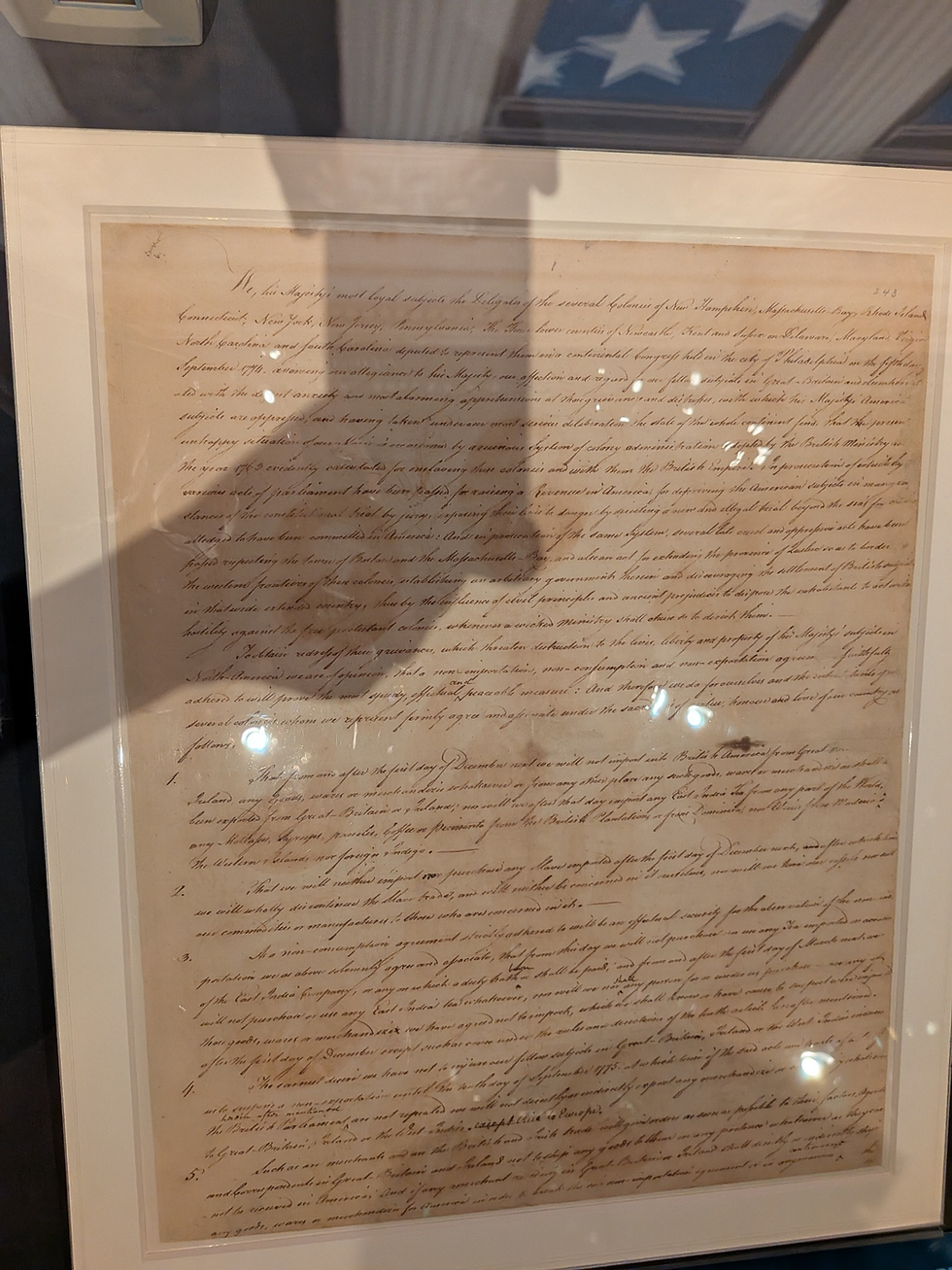
Long before the Declaration of Independence announced the creation of a new nation, representatives from 12 American colonies took an earlier and essential step toward union.
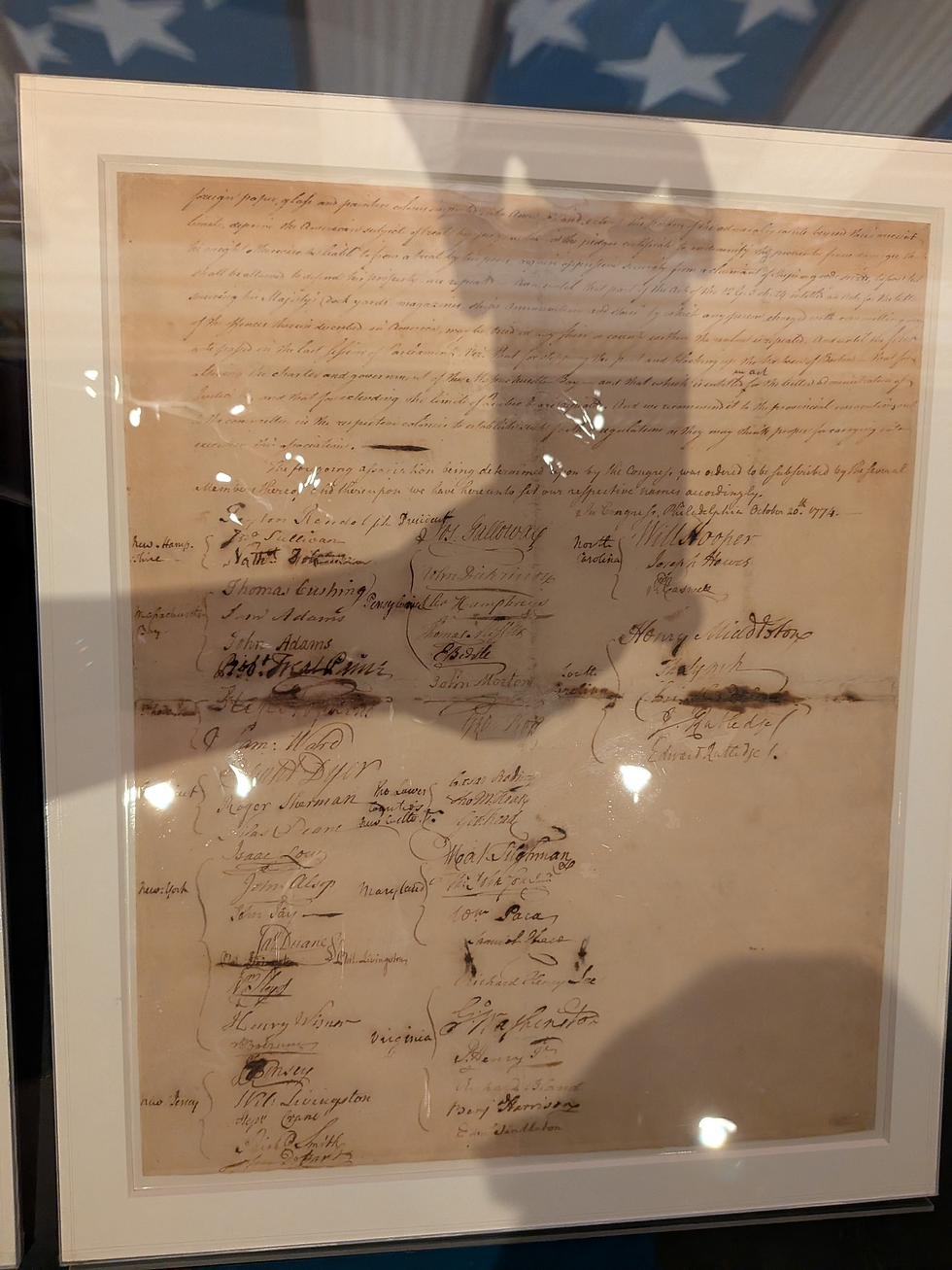
On October 20, 1774, the First Continental Congress adopted the Articles of Association, also called the Continental Association. Signed by 53 delegates, the document created a coordinated economic resistance campaign against British policies and provided the colonies with a system for enforcing it.
The Declaration of Independence was still nearly two years away. Most delegates continued to profess loyalty to King George III and hoped that economic pressure would persuade Parliament to reverse its policies. Nevertheless, the Articles of Association represented something revolutionary in practice: colonies accustomed to managing their affairs separately agreed to pursue a common policy across colonial boundaries.
The National Archives describes the document as the first documented instance of the American colonies coordinating policy together.
A response to the Intolerable Acts
The First Continental Congress assembled in Philadelphia on September 5, 1774, after Parliament imposed a series of punitive measures commonly known in America as the Intolerable Acts.
The laws followed the Boston Tea Party and included closing Boston Harbor, altering the government of Massachusetts and expanding royal authority. Many colonists believed the measures threatened not only Massachusetts but the rights of every British colony in North America.
Delegates arrived from every colony except Georgia. They disagreed over how far resistance should go, but they recognized that isolated protests would be less effective than coordinated action.
Their answer was an economic boycott implemented in stages.
The Articles prohibited the importation of British goods beginning December 1, 1774. They also established a nonconsumption agreement under which colonists pledged not to purchase prohibited products. If their grievances remained unresolved, exports to Britain, Ireland and the British West Indies would cease the following year.
The objective was to pressure British merchants and manufacturers, who would then have a financial incentive to demand changes from Parliament.
According to the National Archives, the value of British imports entering the colonies fell from approximately £3 million to £220,000 during the first six months of 1775. The boycott demonstrated that colonial cooperation could produce measurable economic consequences.
More than a voluntary shopping boycott
The Continental Association went considerably further than asking sympathetic colonists to avoid British tea.
The agreement directed every county, city and town to establish a committee whose members would monitor compliance. When someone violated the boycott, the committee could publish that person’s name so that others would cease doing business with the offender.
In effect, Congress created a local enforcement network extending across much of British North America. These committees helped transform a congressional resolution into coordinated activity within individual communities.
The Articles encouraged colonial manufacturing, agriculture, economy and frugality so Americans could reduce their dependence upon imported products. They discouraged extravagance, gambling, expensive entertainments and elaborate mourning customs. Even raising sheep and conserving wool became part of the resistance campaign.
One provision also pledged that participants would no longer import enslaved people after December 1, 1774 and would “wholly discontinue the slave trade.” That provision did not abolish slavery, and its inclusion partly served the broader trade boycott. Nevertheless, it shows that the Continental Congress included the transatlantic slave trade among the commerce it intended to stop.
Loyal subjects beginning to govern collectively
The Articles opened by describing the delegates as loyal subjects of the king. That language illustrates the transitional character of the moment.
In October 1774, the delegates were not yet declaring an independent republic. They were claiming the rights they believed belonged to them as British subjects while simultaneously creating machinery that operated across colonial governments.
This apparent contradiction is precisely what makes the document important.
The delegates had not yet agreed to separate from Britain, but they had begun acting collectively. They adopted continental policy, established local enforcement organizations and defined consequences for communities that refused to participate.
The agreement declared that a colony refusing to join or later violating the Association would be considered hostile to the liberties of the country. The use of “country” reflected an emerging political identity that was beginning to extend beyond any single colony.
Among the signers were George Washington, John Adams, Samuel Adams, John Jay, Patrick Henry, Richard Henry Lee, Roger Sherman, Caesar Rodney and other figures who would later help lead the Revolution and create the United States.
Their signatures joined men from New England, the Middle Colonies and the South beneath a common agreement.
The infrastructure of revolution

The Continental Association did not prevent war. Fighting began at Lexington and Concord in April 1775, before the economic dispute could be peacefully resolved.
Its organizational legacy nevertheless survived.
The local committees created to enforce the boycott became part of the political infrastructure of the Revolution. They accustomed residents to following continental decisions and demonstrated that the colonies could coordinate policy without direct supervision from Britain.
The Association also helped establish a dividing line between those supporting continental resistance and those remaining loyal to British authority. According to the National Archives, some opponents of the movement began using the term “Loyalist” to distinguish themselves from supporters of the Association.
The Articles of Association therefore occupy an important position between protest and independence. They were not a declaration that the colonies had become a separate nation, but they demonstrated that the colonies were already developing the capacity to act like one.
Before Americans declared themselves independent, they first learned to coordinate their economic power, enforce shared decisions and regard an attack against one colony as a threat to them all.
The nation announced in 1776 had begun organizing itself in 1774.
Learn More
If you would like to learn more about the beginnings of American unity and the Articles of Association, additional information and historical records are available here:


Comments